
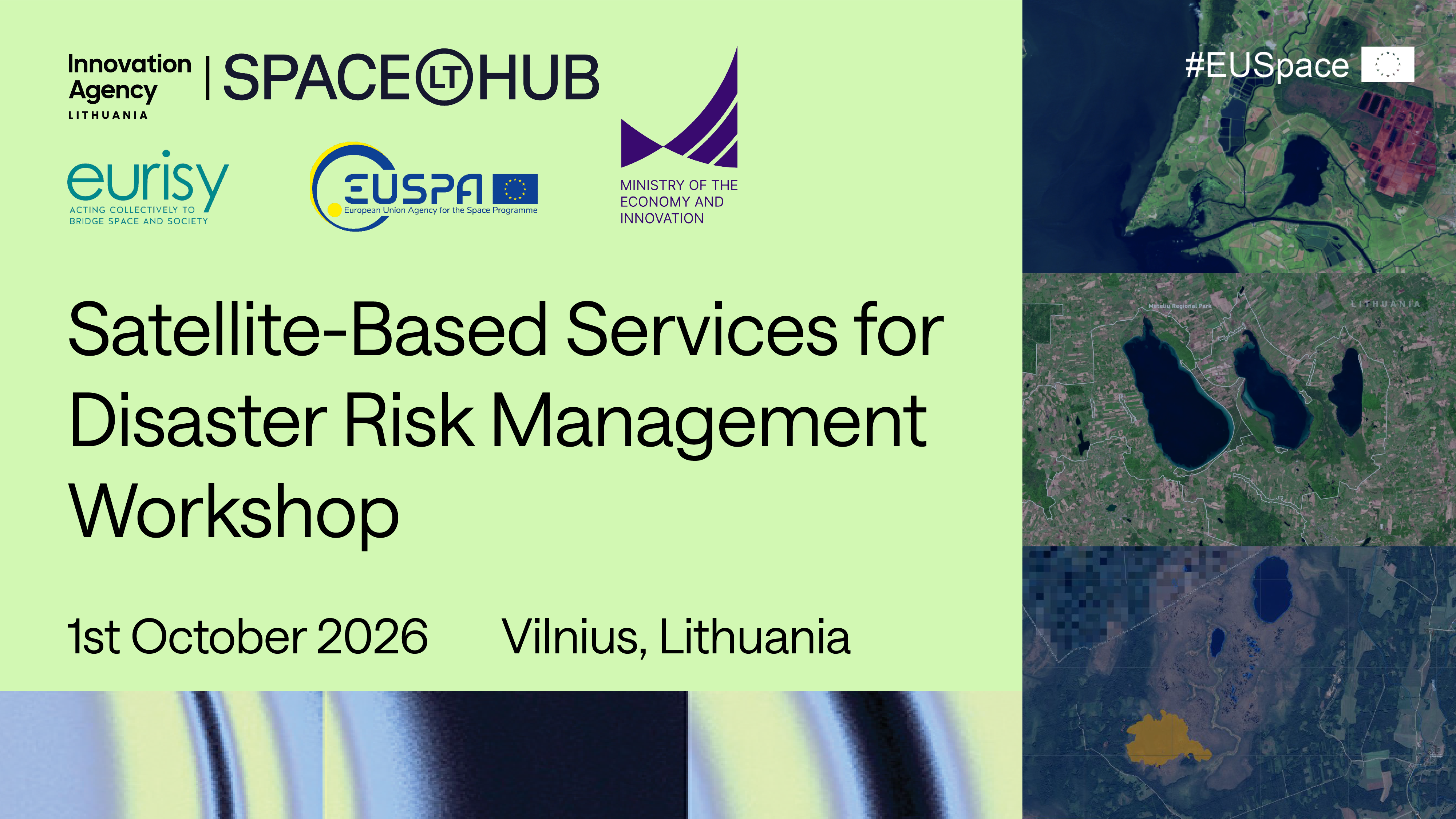
High-Level Policy Introduction
Edvinas Grikšas, Minister of Economy and Innovation
Edvinas Grikšas is Lithuania’s Minister of the Economy and Innovation, serving since September 2025. He holds a Master’s degree in Management from Mykolas Romeris University and a Bachelor’s degree in History from Vilnius University. Before becoming Minister, he held senior positions in the Ministry of the Economy and Innovation, including Head of the Innovation Policy Group and Head of the Innovation Policy Division. His previous experience includes work at the Seimas Chancellery, Varėna District Municipality, and the private sector. He has represented Lithuania in international organisations and programmes, including the OECD, European Space Agency, Horizon Europe, and NATO DIANA.
Rodrigo da Costa, Executive Director, European Union Agency for the Space Programme (EUSPA)
On 16 October 2020, Rodrigo da Costa took up his duties as Executive Director of the European Union Agency for the Space Programme (EUSPA), formerly the European GNSS Agency (GSA). Prior to this, he was the Galileo Services Programme Manager from March 2017. Before joining the GSA, Rodrigo da Costa held several senior project management, business development, and institutional key account management positions in the space industry, in the areas of human space flight, exploration, launchers and R&D. Rodrigo da Costa holds a degree in Aerospace Engineering from the “Instituto Superior Tecnico” in Lisbon, a Master’s degree in Aerospace Engineering from the University of Delft, and an MBA from the EuroMBA consortium of Business Schools.
Monika Paulė, Director of Innovation Agency Lithuania

Dr. Monika Paulė is the Director of the Innovation Agency Lithuania, with over 20 years of international experience in innovation, life sciences, and high-tech business sectors. Throughout her career, she has led international companies and contributed significantly to the development of Lithuania’s innovation ecosystem as well as the strategic management of various organizations. Currently, she leads Innovation Agency Lithuania, which is responsible for strengthening the national innovation ecosystem and driving export growth.
Dr. Christina Giannopapa, Secretary General, Eurisy
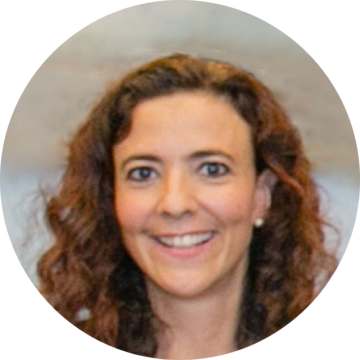
Dr. Christina Giannopapa is the new Secretary General of Eurisy. Prior, she was Head of the Office of the Executive Director of the European Union Agency for the Space Programme (EUSPA). Before that, she was advisor to the Secretary General of Telecommunications and Post of the Ministry of Digital Governance in Greece, seconded from the European Space Agency (ESA). In ESA, she held various posts including the Head of Political Affairs Office of the Director General. She has received 14 academic scholarships and awards and has more than 80 publications in peer-reviewed journals, books and conferences. She has co‐edited the Springer “Handbook on space security”. Dr. Giannopapa is an elected member of the International Institute of Space Law (IISL) and the International Academy of Astronautics (IAA).She is the Vice Chair of the Committee on Space Security of the International Astronautical Federation (IAF) and prior was the Chair of the Committee for Liaison with International Organisations and Developing Nations (CLIODN). She is also the Chair of the Board of Women in Aerospace Europe (WIA-E). Dr. Giannopapa holds a Ph.D. in Engineering and Applied Mathematics; an MEng in Manufacturing Systems Engineering and Mechatronics; and an MBA in International Management from the University of London.
European Union Space Components
Marie Menard, Senior Communication Officer, EUSPA
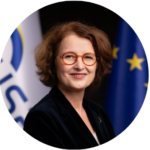
Marie Ménard is a seasoned communications professional with extensive experience in the European Union space sector. She currently serves as a Senior Communication Officer at the European Union Agency for the Space Programme (EUSPA), where she leads strategic communication initiatives to promote the EU Space programme and services. Her role encompasses media relations, public outreach, and stakeholder engagement, aiming to enhance public understanding and support for the EU’s space endeavours.
Marie’s experience in communication and public outreach supports EUSPA’s efforts to promote its activities and engage with stakeholders across the space sector. She holds a DEA in business development from Audencia and a master’s degree in strategic development from Reims Business School.
Francesco Rocca Cirasa, Secured Communications Operations Delivery Manager, EUSPA
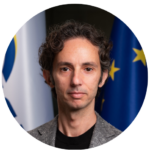
Francesco ROCCA CIRASA is a SATCOM professional working at the intersection of European space policy and programme delivery. He currently contributes to the European Commission’s IRIS2 Integrated Programme Team and serves as the Secure Communications Operations Delivery Manager at EUSPA, supporting the development and implementation of Europe’s next generation secure connectivity infrastructure: GOVSATCOM Hub and IRIS2.
Before joining the European institutions, Francesco worked at Intelsat where he contributed to the development of next generation satellite services and global network solutions. His work has focused on bridging technical, operational, and commercial domains to enable innovation and service delivery at scale.
Francesco holds an Executive MBA from Cambridge Judge Business School and degrees in Telecommunications Engineering from the Georgia Institute of Technology and Politecnico di Torino.
Deividas Petrulevičius, Programme coordinator, Research Council of Lithuania
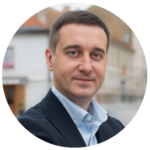
Deividas Petrulevičius is a Horizon Europe programme National Contact Point (NCP) for Digital, Industry and Space at the Research Council of Lithuania. As part of Lithuania’s NCP group, he supports researchers, businesses and public sector organisations in exploring Horizon Europe programme funding opportunities, understanding participation requirements and navigating the proposal preparation process. The NCP group also provides guidance, training and information events to help organisations successfully participate in Horizon Europe.
Chiara Scaleggi, GNSS System Deployment and Operations Manager, EUSPA
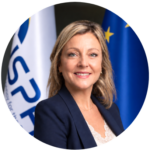
Chiara Scaleggi is a telecommunications and space systems engineer with over 20 years of experience in satellite communications, Search and Rescue, and European space programmes.
She began her career at CNES in 2005, working on innovative satellite communication solutions and connectivity programmes. In 2013, she joined the International Cospas-Sarsat Programme as a System Engineer, contributing to the transition to MEOSAR and the deployment of the SAR/GALILEO Ground Segment.
From 2017, she served as SAR/Galileo Project Manager at CNES, overseeing the Return Link Service, including operations, performance monitoring, maintenance and system evolution, while representing France within the Cospas-Sarsat Organization.
Since 2023, Chiara has been working at the European Union Agency for the Space Programme (EUSPA) as GNSS System Deployment and Operations Manager. In this role, she is responsible for the deployment of EGNOS V3 and the preparation of its operations, contributing to the evolution of Europe’s next-generation satellite-based augmentation system.
Space assets supporting the Disaster Risk Management Cycle
Žygimantas Saruolis, Aero and Space Imagery Analyst, Hnit-Baltic

Žygimantas Saruolis is a Geospatial Imagery Product Manager with a university background in climate systems studies. In his professional work, he specializes in Geographic Information Systems (GIS), remote sensing and geospatial data analysis. His areas of interest include the application of climate, environmental, and Earth observation data to practical challenges, as well as the use of artificial intelligence technologies for geospatial data processing and analysis, including object detection, change detection, and other automated analytical tasks.
Žygimantas has experience working with both open-access and commercial Earth observation data sources, including very high resolution optical and radar satellite imagery. He is actively interested in the latest developments in artificial intelligence, remote sensing, and Earth observation technologies, and their application to the needs of both public and private sector organizations.
Diana Vaičiūtė, Lead researcher at Marine Research Institute, Klaipėda University, Lithuania
Diana Vaičiūtė is a lead researcher at the Marine Research Institute of Klaipėda University, Lithuania, where she leads the Environmental Remote Sensing and Water Quality research group. Her research focuses on Earth Observation and remote sensing for environmental applications, with particular emphasis on aquatic environments and maritime monitoring. She works on the development and application of satellite and remote sensing methods to support the monitoring, assessment, and investigation of marine and coastal environments. Together with the research team, she develops web-based applications integrating Earth Observation and environmental data with machine learning methods to support aquatic pollution monitoring, maritime monitoring, and marine navigation, providing information for environmental assessment, regional security and informed decision-making.
Pavel Ragozin, Institutional Partnerships Manager, Kongsberg NanoAvionics
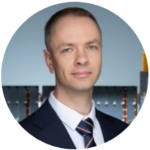
A business development professional with prior experience in knowledge and technology transfer in the academic and governmental sectors. Focuses on expanding business through participation in institutional programmes and government-funded projects, liaising with European and national space ecosystems for strategic positioning in the market.
Tomas Straupis, GIS expert and researcher, Coetus
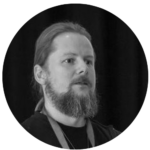
IT professional with over 20 years of experience spanning analysis, software development, testing, process optimisation, and quality management. Specialising in the GIS and insurance sectors, with a strong track record of combining technical execution with robust domain expertise and quality-driven processes.
Maksym Shylov, Specialty Advisor, GrECo Group
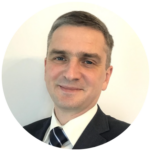
Maksym Shylov is a Specialty Advisor at GrECo Group, focusing on agricultural, crop, and climate-related insurance solutions across Central and Eastern Europe. He has more than 20 years of experience in the insurance and risk management industry, including senior management, consulting, and international business development roles.
His current work focuses on the development of innovative agricultural insurance products that combine satellite observations, meteorological information, predictive yield modelling, and traditional insurance mechanisms. Maksym collaborates with leading insurers, reinsurers, technology providers, and agricultural organizations to improve climate risk management and increase the resilience of farmers to extreme weather events.
He is actively involved in projects across the Baltics, Poland, Croatia, Ukraine, and other European markets. In parallel with his professional activities, he is completing doctoral research focused on innovative risk transfer solutions and the application of data-driven approaches in agricultural insurance.
Current challenges and opportunities related to the uptake of satellite data
Darius Kuliešius, Deputy Chair of the Council, The Communications Regulatory Authority of the Republic of Lithuania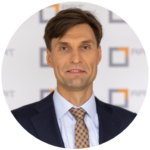
Darius Kuliešius is the Deputy Chairman of the Council of the Communications Regulatory Authority of the Republic of Lithuania (RRT) and a member of the Board of the Association of Lithuanian Supervisory Authorities.
Prior to assuming these positions, he served as an Adviser to the President of the Republic of Lithuania and held various roles at the Ministry of Transport and Communications and the Ministry of the Interior of the Republic of Lithuania. Mr. Kuliešius has extensive experience in public governance and strategic regulation and has also served on the boards of several state-owned enterprises.
At RRT, he is responsible for radio frequency spectrum management and monitoring, electronic communications, the postal sector, artificial intelligence, and other digital connectivity matters. He also coordinates the implementation of measures aimed at strengthening network resilience, including national roaming solutions, direct-to-cell (D2C) initiatives, and the management of challenges related to GNSS interference in Lithuania.
Mr. Kuliešius holds Master’s degrees in law and management.
Viačeslavas Jabluninas, Advisor at the Civil Protection Board, Fire and Rescue Department
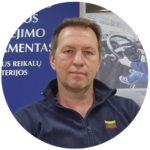
Viačeslavas Jabluninas is an Advisor at the Civil Protection Board of the Fire and Rescue Department of Lithuania. He has experience in emergency communications, information technologies and the development of national public warning systems. His work focuses on the modernisation and integration of multi-channel warning infrastructure, including siren systems, Cell Broadcast and digital communication platforms. He is involved in the development of technical and organisational solutions supporting civil protection, emergency response and population warning at national level. His current interests include the integration of satellite-based services, geospatial information and emerging technologies into operational civil protection processes, with a particular focus on improving situational awareness, resilience and the effectiveness of public warning and emergency communication systems.
Adas Pranckevičius, Chief Specialist of the Climate and Research Division, Lithuanian Hydrometeorological Service

Adas Pranckevičius works at the Climate and Research Department of Lithuanian Hydrometeorological Service. He holds a bachelor’s degree in Meteorology and Hydrology from Vilnius University and master’s degrees in Environmental Engineering from Vilnius Gediminas Technical University and Riga Technical University. His work focuses on assessing and studying Lithuania’s climate as well as the applications of satellite observations for weather, climate and environmental monitoring. Before joining the Climate and Research Department, Adas worked as a hydrologist at the Lithuanian Hydrometeorological Service, gaining experience in field observations and the analysis of river conditions. His remote sensing experience includes products used in operational weather forecasting, as well as high-resolution optical, infrared and radar imagery from satellites in low Earth orbit.
Aušrius Kučinskas, Head of the Direct Support Control Unit, National Paying Agency

Aušrius Kučinskas is the Head of the Direct Support Control Unit at the National Paying Agency (NPA) of Lithuania. He holds a bachelor’s degree in Agricultural Economics. In his role, he oversees the control of EU agricultural support funds, the risk-based selection of applicants and beneficiaries for on-the-spot checks and remote sensing, and coordinates operations across the agency’s regional branches. Over the past seven years, Aušrius has been actively involved in all NPA initiatives leveraging Copernicus Earth observation data for area and farming practice monitoring. Since 2019, he has led the integration of Sentinel satellite data into the Area Monitoring System (AMS) and the development of the “NMA agro” mobile application for direct support verification.
Wrap up
Zaklin Butinar, Interim Secretary General, Eurisy

Zaklin Butinar acts as Eurisy’s Interim Secretary General. She joined Eurisy in 2024 as a Project Officer, where she supported the development of several projects as an Eurisy representative, including projects aiming at the development of skills in the downstream space sector. Prior to joining Eurisy, she worked at the Slovenian Ministry of the Interior. She is a PhD candidate in Public International Law at the University of Ljubljana, specialising in international space law. She previously obtained an LL.M. from University College London and a law degree from the University of Ljubljana, and was also a Fulbright Scholar at Columbia University.
Marie Menard, Senior Communication Officer, EUSPA
Marie Ménard is a seasoned communications professional with extensive experience in the European Union space sector. She currently serves as a Senior Communication Officer at the European Union Agency for the Space Programme (EUSPA), where she leads strategic communication initiatives to promote the EU Space programme and services. Her role encompasses media relations, public outreach, and stakeholder engagement, aiming to enhance public understanding and support for the EU’s space endeavours.
Marie’s experience in communication and public outreach supports EUSPA’s efforts to promote its activities and engage with stakeholders across the space sector. She holds a DEA in business development from Audencia and a master’s degree in strategic development from Reims Business School.