
From Satellite Data to Disaster Action: Eurisy Highlights the Role of Space in Building Resilience at the Space Summit for a Resilient Future
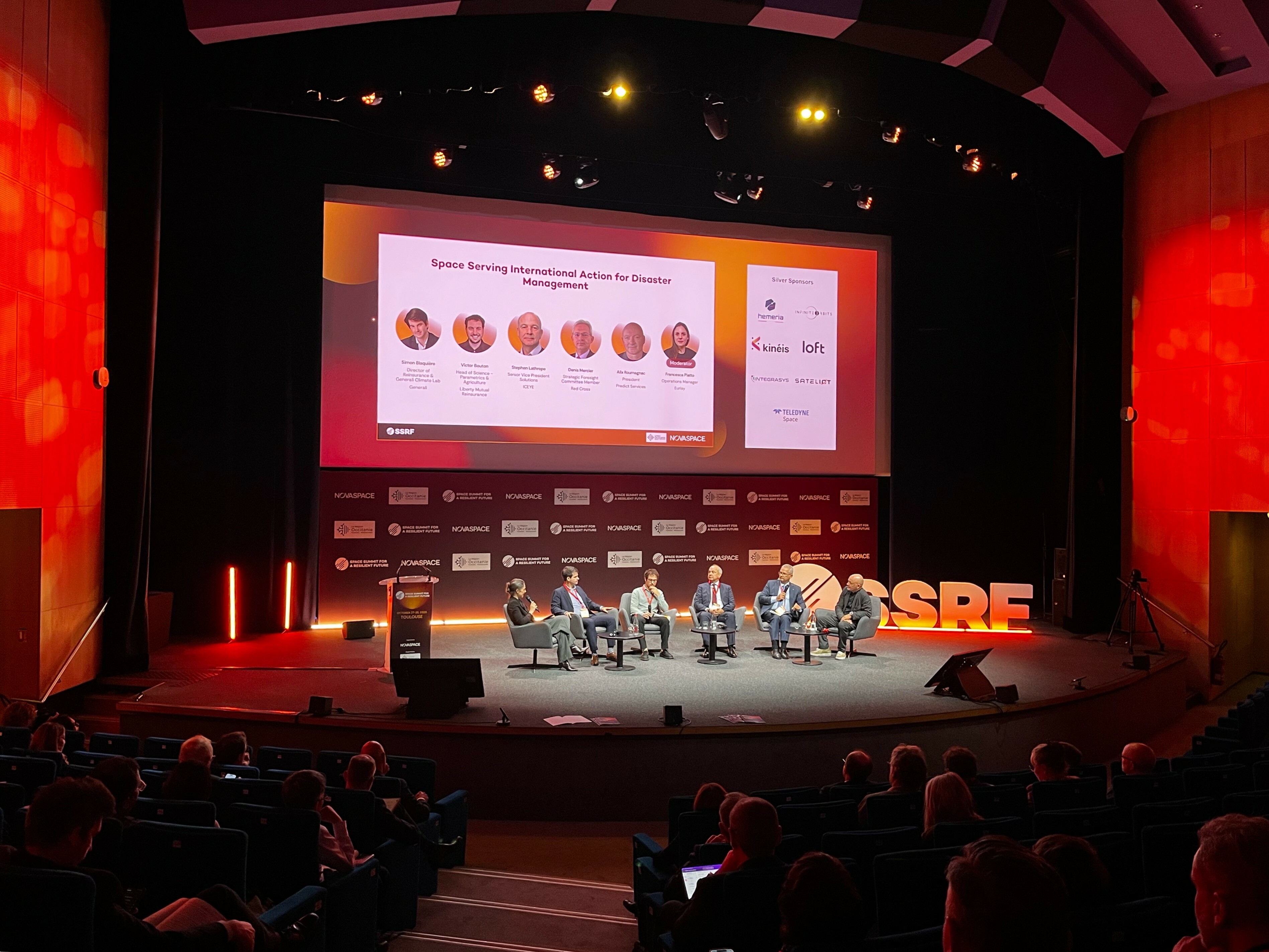
On 27–28 October 2026, Eurisy participated in the Space Summit for a Resilient Future, organised by Novaspace in Toulouse. The event brought together European policymakers, space agencies, industry representatives, and stakeholders from critical sectors to discuss how space technologies can help societies anticipate, respond to and recover from crises. From climate-related disasters and infrastructure protection to the resilience of Europe’s space ecosystem, discussions highlighted the growing importance of translating satellite capabilities into operational resilience services that address concrete societal needs.
Throughout the Summit, speakers emphasised that strengthening resilience requires more than developing new technologies: it also means ensuring that space-based information is accessible, reliable, and integrated into decision-making processes. Representatives from Occitanie (France), Catalonia (Spain) and Canada highlighted thorough regional examples that regional cooperation is essential to move from technological development to practical adoption, connecting public authorities, research, industry and financial actors to strengthen the resilience of territories and communities. The discussion highlighted the need for a multidimensional approach to resilience, addressing critical infrastructure, technological security and societal preparedness.
Lorena Baix Alonso, Deputy Director-General at the European Commission’s Directorate-General for Defence Industry and Space (DG DEFIS), highlighted three essential requirements: the speed of information delivery, the accuracy and reliability of data, and effective coordination between stakeholders. She also underlined the complementary contributions of Earth observation, satellite navigation, and secure connectivity to Europe’s resilience, particularly in supporting public authorities and emergency management.
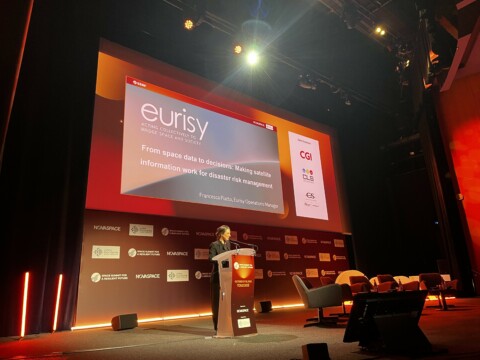 Building on these discussions, Eurisy organised and moderated the panel “Space Serving International Action for Disaster Management”, led by Francesca Piatto, Eurisy’s Operations Manager. The session brought together Alix Roumagnac, President of Predict Services; Denis Mercier, Strategic Foresight Committee Member at the Red Cross; Simon Blaquière, Director and Head of Reinsurance at Generali Climate Lab; Stephen Lathrope, Senior Vice President, Solutions at ICEYE; and Victor Bouton, Head of Science – Parametrics & Agriculture at Liberty Mutual Reinsurance.
The panel examined how satellite-derived information can support the entire disaster management cycle, from risk anticipation and prevention to emergency response and recovery. By connecting satellite service providers with humanitarian organisations, disaster risk management specialists and the insurance sector, Eurisy encouraged exchanges on the practical challenges of turning information into timely decisions and action.
The speakers shared concrete examples from their respective sectors:
- Alix Roumagnac highlighted how satellite observations, combined with local data, can improve hazard monitoring and early warning, including through activities in Rwanda under the Space4EU programme.
- Stephen Lathrope presented the service-provider perspective, illustrating how ICEYE’s collaboration with Predict Services combines complementary datasets and expertise to support decisions before, during and after disasters, including through the potential of AI and foundation models.
- Denis Mercier stressed the importance of satellite imagery, positioning and communications for humanitarian operations, while emphasising that these capabilities must be integrated into preparedness plans, supported by trained teams and reliable access to infrastructure.
- Simon Blaquière presented applications of Earth observation across the insurance value chain, from risk assessment and underwriting to post-disaster analysis, with examples including drought-related ground settlement in France, Cyclone Chido in Mayotte and wildfires.
- Victor Bouton’s contribution brought in the perspective of parametric insurance and anticipatory financing, highlighting how predefined indicators and financial triggers can help mobilise resources ahead of or immediately following disasters.
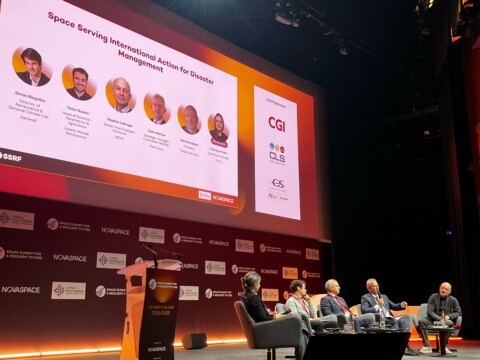 Across the different perspectives, a common message emerged: the value of space technologies lies not only in collecting data, but in combining it with local knowledge, operational expertise and appropriate financing mechanisms to make information accessible, understandable and actionable. The discussion reinforced Eurisy’s role in connecting the space, humanitarian and financial sectors and supporting the wider uptake of satellite-based solutions for more resilient societies.