Unlocking the Full Potential of Space in Northern Ireland
Northern Ireland is rapidly establishing itself as a dynamic player in the global space sector, building on decades of engineering excellence and international collaboration. Its ambitions are rooted in a remarkable industrial heritage, and today, the region is transforming that legacy also into a future-focused space economy.
This ambition was on full display at the “Unlocking Space” conference in Belfast, organised by the Northern Ireland Space Office, Eurisy, and Matrix: The Northern Ireland Science Industry Panel.
Bringing together leaders from government, industry, academia, and investment, the event focused on unlocking the potential of space technologies to drive economic growth, innovation, and public sector transformation.
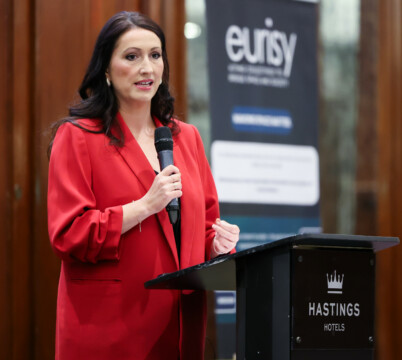
Northern Ireland’s Deputy First Minister, Emma Little-Pengelly.
A highlight of the conference was a keynote address by Northern Ireland’s Deputy First Minister, Emma Little-Pengelly, who emphasised the growing strategic importance of space.
“Space is no longer operating at the margins of government policy; it is becoming central to it.”
She highlighted the vital role satellites already play in communications, agriculture, environmental monitoring, disaster response, and critical infrastructure, while stressing that regions investing in talent, innovation, and collaboration today will help shape the economy of tomorrow.
A recurring theme throughout the event was the importance of collaboration. Speakers agreed that no country or region can unlock the full potential of space alone. Success will depend on partnerships that connect governments, businesses, researchers, and innovators across borders.
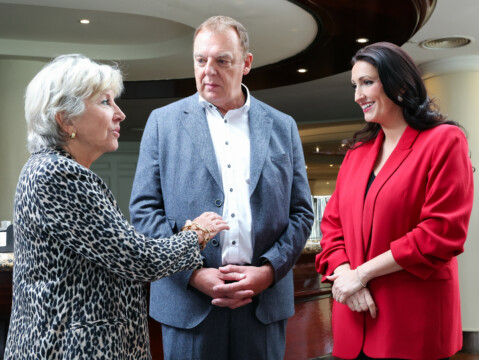
From left to right: Dominique Tilmans, Eurisy President, Robert Hill, Director NI Space Office, Northern Ireland’s Deputy First Minister, Emma Little-Pengelly.
As Eurisy President Dominique Tilmans noted: “By bringing the Eurisy community to Belfast, we hope to create new conversations and new opportunities for cooperation.”
That vision was reflected throughout the day, with discussions and panels bringing together local, national, and international perspectives to share expertise and build new partnerships.
Looking ahead, Northern Ireland’s space strategy is centred on four priorities: advanced manufacturing, public-sector transformation, cyber resilience, and stronger European collaboration.
Space technologies, particularly satellite data, are increasingly recognised as valuable tools for improving public services, supporting evidence-based decision-making, and addressing challenges such as environmental monitoring, infrastructure management, and resilience planning.
Importantly, the sector is no longer viewed as a standalone industry. Instead, space capabilities are becoming embedded across a wide range of sectors, from engineering and infrastructure to digital technologies and data services, helping to drive broader economic transformation.
One of the conference’s most significant discussions focused on the role of government as both a customer and catalyst for innovation.
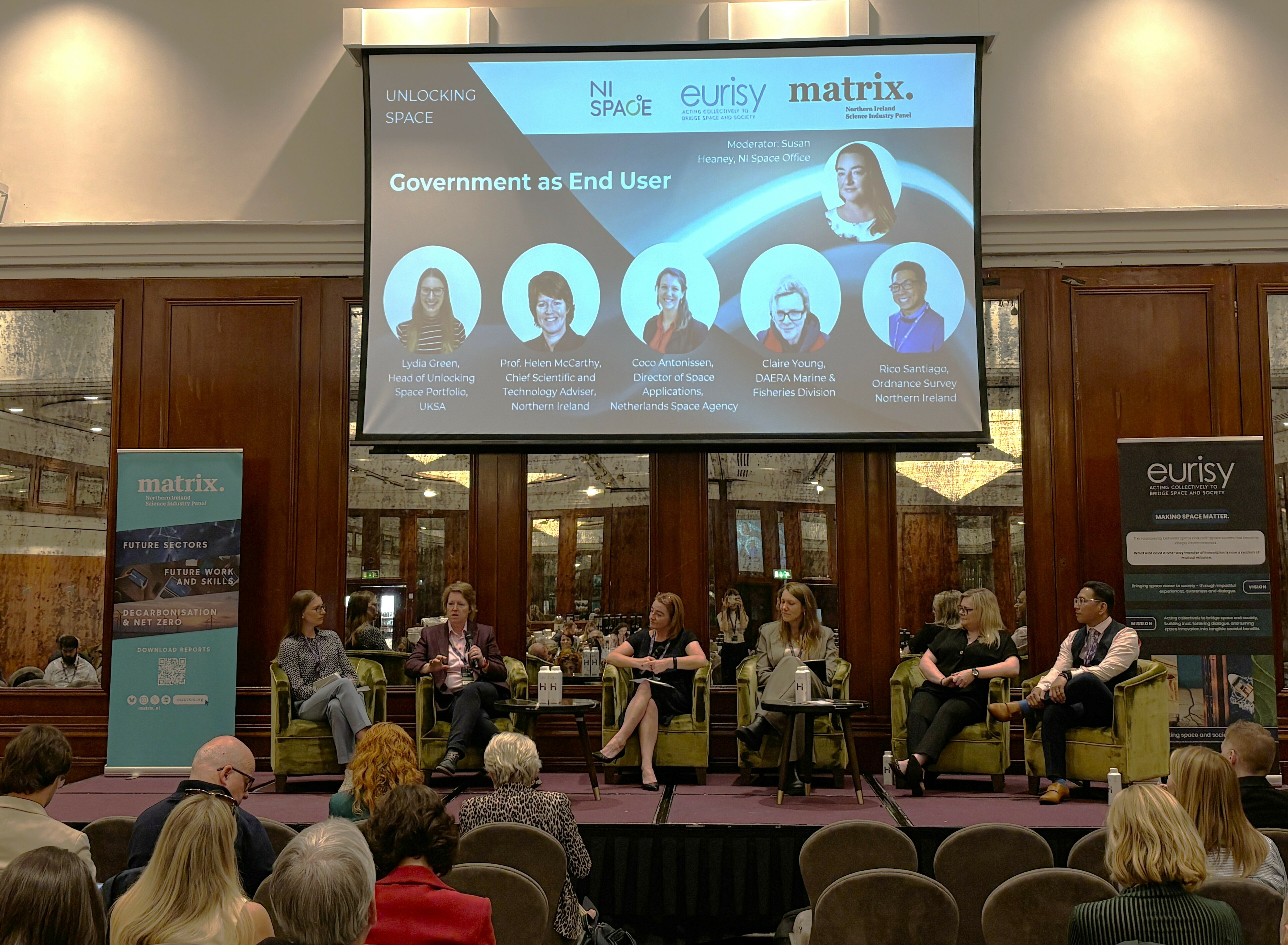 Lydia Green, Head of the “Unlocking Space” Portfolio of the UK Space Agency, described the public sector as one of the industry’s most important markets, helping to de-risk innovation and create confidence for private investments. She also highlighted Northern Ireland’s highly connected ecosystem as an ideal environment for testing and scaling new solutions.
However, speakers acknowledged that unlocking the full value of space technologies requires easier routes into government and more agile procurement processes. Efforts are already underway, including the publication by the UK Government of Areas of Research Interest (ARIs), designed to help businesses and researchers better align with public-sector challenges.
The practical benefits of adopting space technologies in Northern Ireland are already becoming evident. Claire Young from the Department of Agriculture, Environment and Rural Affairs of Northern Ireland, highlighted the use of satellite data to monitor cyanobacteria in Lough Neagh, the largest lake on the island of Ireland and in the British Isles, providing insights at a scale and frequency that traditional methods cannot match.

Claire Young, DAERA Marine & Fisheries Division, and Rico Santiago, Ordnance Survey of NI (OSNI)
Still, access remains a critical issue, as Professor Helen McCarthy, Northern Ireland’s first Chief Scientific and Technology Adviser, stressed:
“You’re not going to unlock the value of these technologies unless we unlock the routes into government.”
The business panel reinforced another key message: successful innovation begins with clearly defined challenges rather than technology itself.
Josep Colomé, Director of the Area for the Promotion of the Space Sector of Catalonia, outlined Catalonia’s approach:
“We start by understanding the problem, without thinking about the technology first—then we assess how space solutions can help.”
This needs-driven approach has enabled space technologies to be successfully integrated into public services in Catalonia through targeted pilots, innovation challenges, and clear pathways from experimentation to procurement, a great example for Northern Ireland.
At the same time, panellists highlighted persistent barriers, particularly around procurement. Gary Connolly from Craxel UK offered a clear assessment:
“The procurement process is still fundamentally long and broken, it can stifle innovation.”
From left to right: Ken Gordon, European Space Agency, Robert Cross, UK Space Agency, Dr Craig Brown, UK Space Agency.
The discussion concluded that the future success of the space sector will depend not only on technological breakthroughs, but on how effectively those technologies are adopted, integrated, and scaled in real-world environments.
The investment panel concluded the journey, exploring how businesses can navigate the funding path from concept to scale.
Speakers highlighted the importance of understanding the funding ladder: public funding and grants help reduce early-stage technical and commercial risk, angel investors support businesses in their formative stages, and venture capital typically becomes relevant once a company has demonstrated market potential and is ready to grow.
A consistent message emerged: investors back teams as much as technology. While strong ideas matter, long-term success depends on a team’s ability to adapt, solve problems, and execute effectively.
Market validation is equally important. Companies must clearly articulate the problem they are solving, identify their customers, and demonstrate why space technology is essential to their solution.
Collaboration was also identified as a critical success factor. Most space companies operate within broader value chains, making partnerships essential for accessing markets and delivering complete solutions.
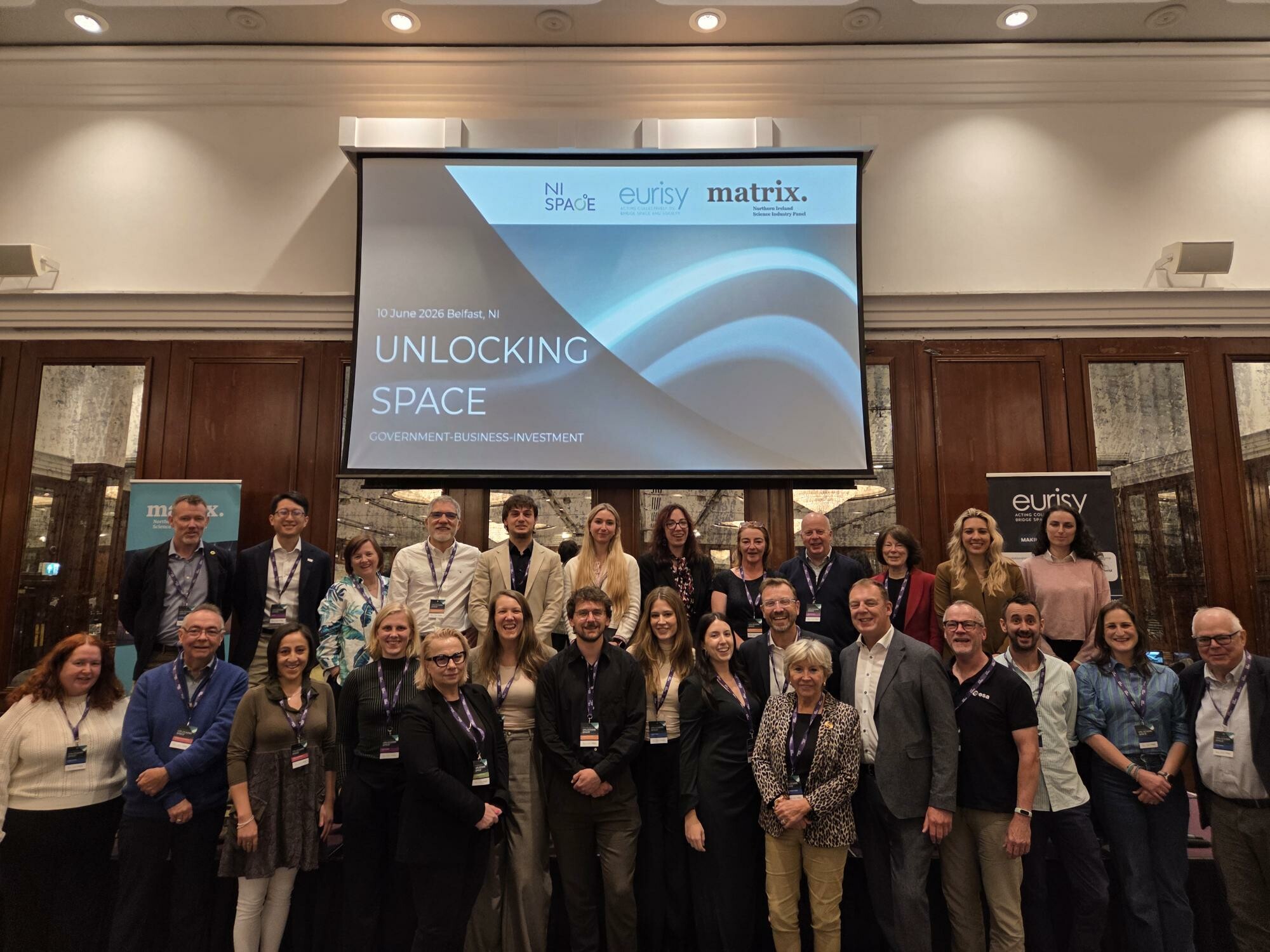
The conference concluded with an interactive discussion on what a holistic future solution should look like to better support public-sector decision-making in Northern Ireland.
While the conversation began with technology, it quickly shifted to the broader conditions needed for success. Participants agreed that future solutions must be user-centred, easy to adopt, and designed around real-world needs. Rather than creating entirely new systems, there was strong support for making better use of existing capabilities, improving visibility across the ecosystem, and strengthening collaboration between organisations.
The consensus was clear: the biggest barriers are not technical, but organisational and cultural. Building trust, improving governance, and fostering collaboration will be just as important as developing new technologies.
Backed by strong leadership, growing investment, and a collaborative ecosystem, Northern Ireland is well positioned to realise its space ambitions.
The “Unlocking Space” conference highlighted the value of bringing together diverse perspectives to share insights, challenge assumptions, and co-create practical solutions. In doing so, it not only showcased the strength of the sector today, but also marked the beginning of new ideas, partnerships, and opportunities that will help unlock the full potential of space in Northern Ireland in the years ahead.